 Digital guide · Fillable eBook
After the Noise Stops
A field guide to the after.
You hit goal weight and waited for the confetti. What showed up instead was quiet: a body you don’t fully recognize, a social calendar with holes where the dinners used to be, and a brain still running software written for someone much heavier. Every GLP-1 resource stops at the after photo. This one starts there.
What’s inside
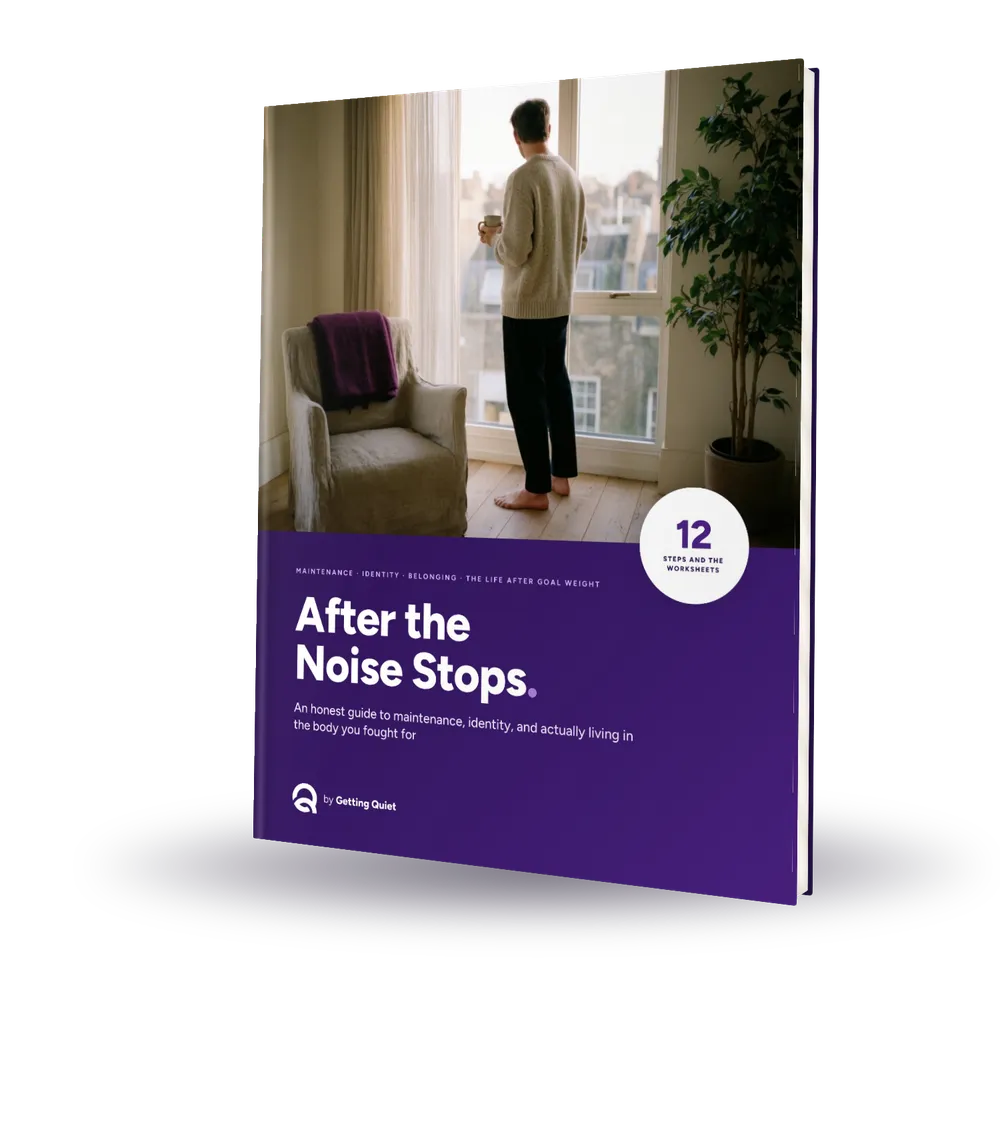
Twelve steps for the life after goal weight.
After the Noise Stops is a 49-page digital guide built around the three threads that actually move in maintenance: your body, your belonging, and your identity. Each step is a few honest pages and a worksheet you can type straight into.
steps in four parts
Ground (where you actually are), Build (your maintenance architecture), Decide (medication, relationships, and three true things), and Hold (locking it in, and the early-warning reset).
Sixteen fillable worksheets
From the gap statement to the early-warning dashboard.
A short check at the end of each part
Three questions. Nobody is grading you.
“From my side of it” notes
What each step looked like for me, two years into maintenance.
When it goes sideways
Six honest fixes for the problems nobody warned you about.
Five sheets to print and reuse
Maintenance quick-reference, identity language, medication conversation prep, social circle audit, and the long-game challenge canvas.
Level up
Design mode, the master checklist, and a quarterly gut-check: ten honest yeses, four times a year.
Resources and sources
Including the clinical studies referenced in the medication step.
Fillable eBook. Open it in a reader app rather than a browser tab so your answers save.
Look inside
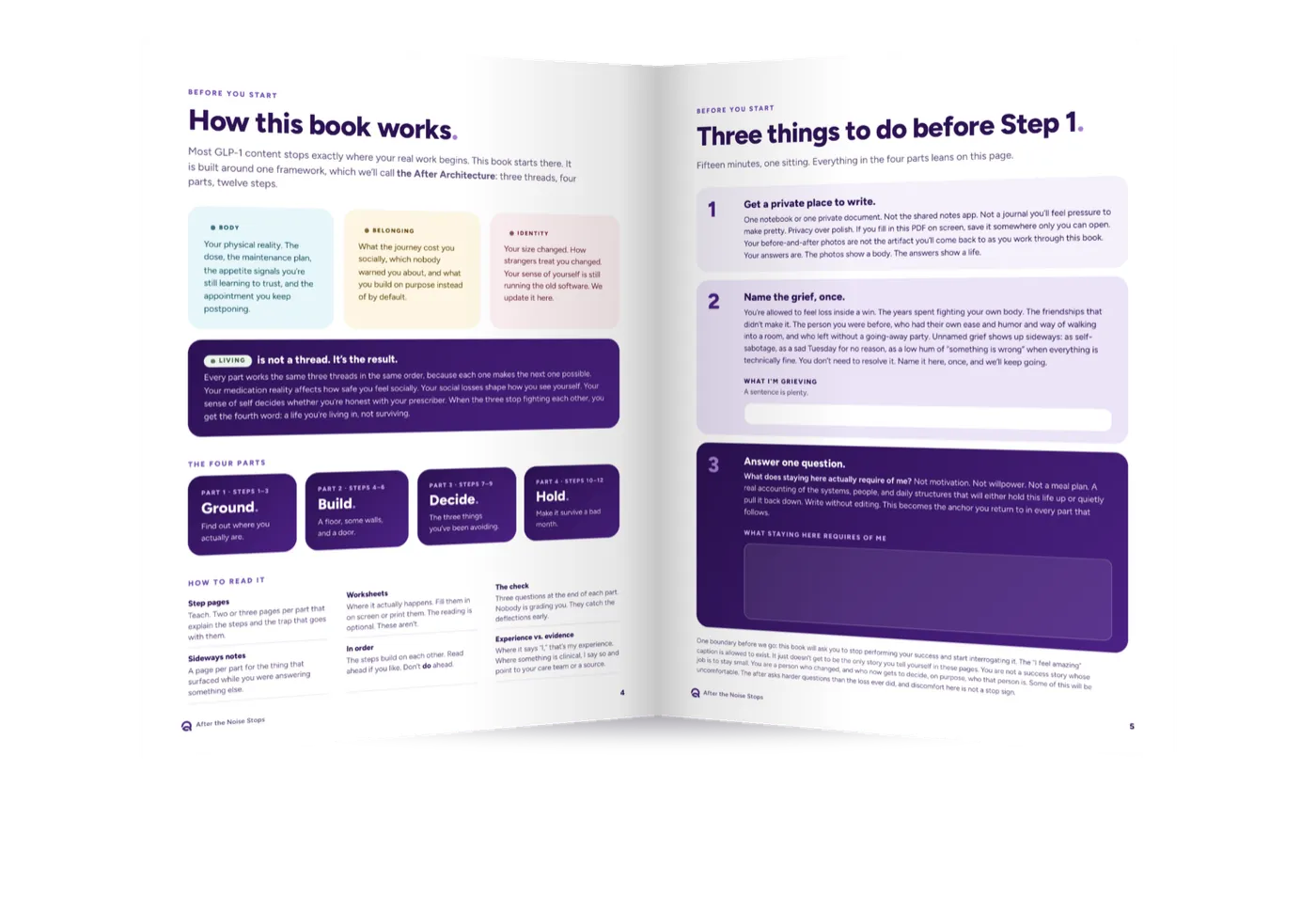
Every page is built to be used, not just read.
Step pages teach. Worksheets are where it actually happens. Fill them in on screen or print the pages you’re working on.
On the map
A few of the steps
- Your Medication Reality
- The Gap Statement
- The Floor: Your Maintenance Architecture
- The Relationship Reckoning
- Say It Somewhere Real
- Early Warning and the Three-Move Reset
No promises
What it isn’t
A weight-loss plan, a medication guide, or therapy. There are no targets, no before-and-afters, and no promises about what the scale will do.
Some weeks you’ll finish a step in an evening. Some weeks the worksheet sits open for ten days.
Both count.
Digital guide · Fillable eBook
After the Noise Stops
$47.00 USD
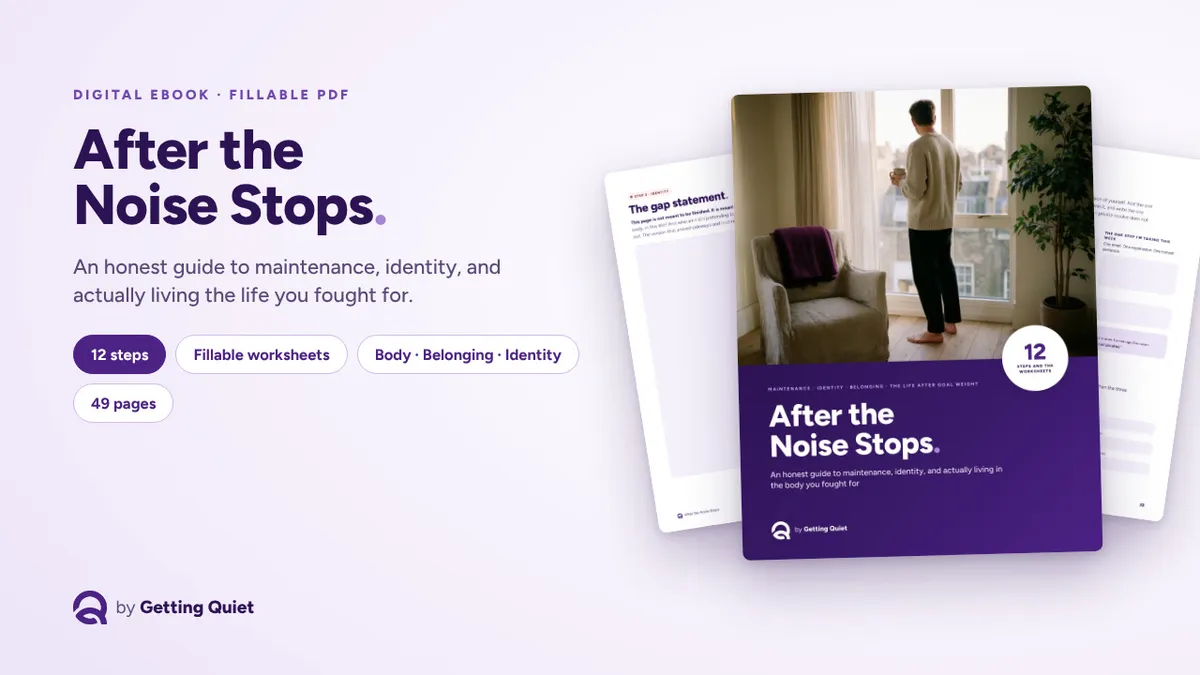
Get the guide- 12 steps and 16 fillable worksheets across 49 pages
- Fillable eBook, US Letter size
- Type straight into it on your phone, tablet, or computer
Open it in a reader app (Preview, Acrobat, or the Files app on your phone) so your answers save. Prefer paper? Print the pages you’re working on.
Getting Quiet shares lived experience, general education, and practical tools. For medical decisions and individual treatment questions, talk with your qualified care team.